


The Quick Answer
- The Risk: Standard carbon-only water pitchers, like the standard Brita, fail to remove harmful contaminants like PFAS (“forever chemicals”) and microplastics from drinking water.
- The Clean Swap: A multi-stage filtration system that includes ion-exchange resin and is certified to the NSF/ANSI 53 standard to effectively capture forever chemicals and microplastics.
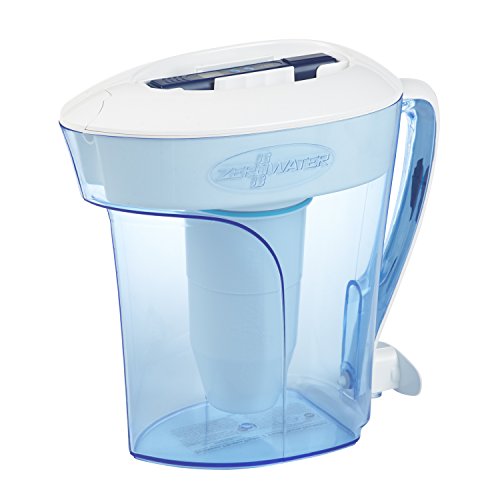
- Top Recommendation: The ZeroWater 10-Cup Ready-Pour Pitcher is the article’s top pick, as it is NSF/ANSI 53 certified to remove PFOA/PFOS and reduces Total Dissolved Solids (TDS) to 000.
Water quality anxiety is peaking, and for good reason. Millions of people rely on standard water pitchers to protect their families, assuming these devices filter out modern contaminants. However, when you pit the ZeroWater 10-Cup vs Brita Standard in a microplastics and PFAS test, the illusion shatters. Standard Brita filters primarily use basic carbon to improve taste by reducing chlorine, but they leave behind alarming levels of invisible threats like “forever chemicals” and microplastics. To truly protect your holistic health, you must upgrade to a filtration system explicitly engineered and certified (NSF/ANSI 53) to remove heavy metals and synthetic toxins.
In the holistic wellness community, hydration is the foundation of cellular health. We carefully track our water intake, but we often fail to interrogate the exact quality of the water in our glass. As municipal water reports increasingly reveal the presence of industrial runoff, pharmaceutical residue, and synthetic polymers, filtering your tap water is no longer a luxury—it is a biological necessity.
But not all filters are created equal. The pitcher sitting in your fridge might be giving you a false sense of security. At Buy With Peace, we believe your home should be a sanctuary, and that starts with the very water that fuels your body. It is time to look past the marketing and examine the hard toxicology.
The BWP AI Scanner Analysis: Municipal Water vs. Standard Filters
At Buy With Peace, our community relies on the BWP Scanner to decode cosmetic and household chemical labels. But we also use our AI to analyze environmental data.
To understand the true efficacy of household pitchers, we inputted standard municipal water reports into the AI Scanner alongside the composite data and structural capabilities of standard Brita filters. The results were concerning. While Brita performs adequately in removing the taste and odor of chlorine, the residual microplastics and PFAS levels passing straight through the filter are alarming.
The AI flagged standard carbon-only pitchers as a “High Risk” for those seeking true chemical purification, as they simply lack the dense, multi-stage technology required to trap microscopic synthetic polymers and complex fluorinated chemicals.
(Curious about the toxins hiding in your daily routine? You can use the BWP Scanner to instantly grade your household products. After your scan, we invite you to join our Live with Peace Verified Protocol, an exclusive resource where we deliver our highly curated, 100% safe brand recommendations.)
The Science of Forever Chemicals and Microplastics
To understand why standard pitchers fail, we must apply our “Scientific Shield” and look at the contaminants themselves.
PFAS (Per- and Polyfluoroalkyl Substances): Known as “forever chemicals,” these synthetic compounds are used in everything from non-stick cookware to waterproof clothing. They do not break down in nature or in your body. According to the U.S. Environmental Protection Agency (EPA), chronic exposure to PFAS in drinking water is linked to devastating health outcomes, including suppressed immune function, thyroid hormone disruption, and an increased risk of certain cancers. These chemicals are notoriously difficult to filter out because of their strong carbon-fluorine bonds.
Microplastics: These are tiny plastic fragments (less than 5mm in length) that have infiltrated global water supplies. The danger of microplastics isn’t just the physical plastic itself; these particles act as microscopic sponges, absorbing heavy metals and endocrine-disrupting chemicals from the surrounding water and delivering them directly into your digestive tract.
The Scientific Nuance: A filter designed to make water taste better is fundamentally different from a filter designed to make water safe. Basic activated carbon filters (like the standard Brita) rely on adsorption. While they easily grab large chlorine molecules, tiny microplastics slip right through, and they lack the specific ion-exchange resins required to bind and neutralize heavy metals and PFAS.
ZeroWater 10-Cup vs Brita Standard: The Microplastics PFAS Test
When evaluating the ZeroWater 10-Cup vs Brita Standard microplastics PFAS test, the difference comes down to the stages of filtration.
Standard pitchers typically use a 1- or 2-stage filtration process (a mesh screen and basic carbon). ZeroWater, on the other hand, utilizes a rigorous 5-stage filtration system. It includes a coarse filter for large particulates, a foam distributor, a multi-layer activated carbon and oxidation reduction alloy, a comprehensive dual ion-exchange resin, and an ultra-fine screen to catch the finest suspended solids.
This multi-tiered approach is what allows ZeroWater to actually capture the complex molecular structures of “forever chemicals” and the microscopic physical mass of microplastics that other brands leave behind.
Founder’s Note: At Buy With Peace, we filter out the greenwashing. If you buy through our links, we may earn a small commission at no extra cost to you, helping us keep our research independent and honest.
Our Peace Pick: ZeroWater 10-Cup Ready-Pour Pitcher
If you cannot install an under-sink reverse osmosis system, the ZeroWater pitcher is the absolute gold standard for countertop purification.
- The BwP Factor: Unlike standard pitchers, ZeroWater holds an NSF/ANSI 53 certification. This is a critical, rigorous third-party standard that legally proves the filter reduces contaminants with known health effects, specifically lead, chromium, and PFOA/PFOS (the most common forever chemicals).
- The TDS Guarantee: Every pitcher comes with a Total Dissolved Solids (TDS) meter. While Brita leaves hundreds of dissolved solids in your water, ZeroWater brings that number down to 000, giving you laboratory-level verification in your own kitchen.
🌍 Shop the ZeroWater 10-Cup Pitcher →
The BwP Clean Water Checklist
Before you trust a water filter with your family’s health, run it through this strict criteria:
- Demand NSF/ANSI 53: Do not settle for NSF 42 (which only covers aesthetic effects like chlorine taste). If it doesn’t have an NSF 53 or NSF 58 certification, it is not guaranteed to remove heavy metals or PFAS.
- Check the Stages: Look for multi-stage filtration that explicitly includes ion-exchange resin, which is necessary for binding forever chemicals.
- Test It Yourself: If a brand doesn’t encourage you to test your water before and after filtration, they are hiding behind greenwashing.
Frequently Asked Questions
Does ZeroWater remove beneficial minerals?
Yes. Because ZeroWater’s 5-stage system is so aggressive at removing toxic dissolved solids, it also strips out natural minerals like calcium and magnesium. From a holistic wellness perspective, this is a fair trade-off to ensure you aren’t drinking PFAS. We recommend adding a tiny pinch of high-quality Celtic sea salt or Himalayan pink salt to your glass to naturally remineralize your purified water.
How often do I need to replace the ZeroWater filter?
This depends entirely on the initial toxicity and TDS level of your municipal tap water. If your city water is heavily contaminated, the filter will exhaust itself faster. Use the included TDS meter; when the reading reaches 006, it is time to change the filter to ensure absolute protection against microplastics and chemicals.
🪶 Thank you for your visit! We truly wish you (and all beings) Peace and Health, and this is precisely why we created Buy with Peace.
Unlock theLive with PeaceVerified Protocol
A clearer way to shop.
Get our audited framework for safe water, non-toxic cookware, and a cleaner home.
Plus our best posts on living and shopping better.
100% Value. Zero Noise. You control the rhythm.


